
TLDR – Tesla, Taxes, Equitability
- Tesla earned $10.8B in U.S. income over three years and paid just 0.4% in federal tax.
- Workers and small businesses typically pay effective rates closer to 15–35%.
- The tax code’s most powerful tools are built around capital income, not wages.
- “Creative accounting” works for the rich, who can afford experts and benefit from tax complexity.
- The richest 10% own most stocks and thus capture the best tax perks and planning options.
- Research shows average voters’ preferences rarely shape policy when elites disagree.
- Elections tend to reflect aristocratic power, not everyday people’s interests and needs.
- A fair system makes those who extract the most from public resources pay the most back.
- To increase fairness: cap mega-firm giveaways, simplify small-business taxes, use sortition.
- A truly progressive flat tax model that accounts for things like stocks and capital gains would be ideal.
According to the Institute on Taxation and Economic Policy (ITEP), Tesla has earned $10.8 billion in U.S. income over the last three years and paid only $48 million in federal tax, which comes to an effective rate of 0.4 percent.
Meanwhile, the average worker and many small businesses see roughly 15%-35% of their paycheck disappear to taxes. Income tax, Social Security, and Medicare come out before any of us touch a dollar.
This speaks to the two different realities that working class Americans and wealthy Americans live in. Or, to put it another way: American economic, tax, civil, and legal systems are geared toward the rich, while disenfranchising the working class.
How Tesla Gets to Near-Zero Taxes
So how does Tesla get to near-zero taxes in the first place? Here are a few of the things they do to lower their tax bill.
The Corporate Toolkit That Keeps Taxes Low
According to ITEP’s review of Tesla’s financial reports, the company lowers its federal tax bill with a few big tools:
- Net operating loss carryforwards: Early on, Tesla lost a ton of money while it grew. The tax code lets companies “carry forward” those losses and subtract them from later profits. Therefore, big early losses act like a shield for future income.
- Executive stock-option deductions: Elon Musk and top leaders take pay mostly in stock options, not normal salaries. When those options pay out, Tesla often gets a tax deduction tied to the value of those shares. Because the share price can explode, the deduction can be huge.
- Accelerated depreciation: Tesla buys big factories, robots, and other gear. The government lets companies write off those costs faster than the machines actually wear out. As a result, taxable income drops even while real-world profits rise.
- Tax credits, especially for “green” stuff: Electric vehicles and certain kinds of energy spending earn special tax credits. Those credits directly reduce the tax bill dollar for dollar. So you can make billions in profit and still cut your tax to near zero.
Every one of these tools is legal. However, that doesn’t mean that they aren’t problematic. They are all much easier for people with big wallets and lots of capital to take advantage of. They are not readily available for most working class individuals or small business owners. And certainly not at the scale that companies like Tesla and individuals like Elon Musk are using them at.
“Creative Accounting” is a Luxury Only the Wealthy Can Afford
In addition to the corporate toolkit above, the rich benefit from access to top accountants who can do the “creative accounting” necessary to effectively leverage these and other tax loopholes, credits, and nuances.
Moreover, recent research on tax preparers shows that paid professionals often reduce clients’ tax bills more than self-filers can. And more complex returns with higher incomes bring larger savings from expert planning.
In short, the rich:
- Gain more from each percentage point shaved off than working class individuals
- Can more readily afford the expert planning required for “creative accounting”
- Have more complex income streams that offer more levers to pull
- Have the time, bandwidth, and resources to plan far ahead
All this is to say that the more money you start with, the more our tax system works in your favor.
Why Workers and Small Businesses Can’t Copy Tesla
There are a variety of reasons why Tesla’s tax rate just isn’t possible for those with smaller wallets.
Life in the W-2 Box
If you work a normal job, your employer withholds taxes from each paycheck. You might be able to adjust how much you withhold from each paycheck, but that is about the extent of what you can do. Indeed, according to the IRS and Tax Policy Center, most people just take the standard deduction and maybe save in a retirement account.
So a worker’s main income:
- comes as wages
- gets taxed as they earn it
- offers limited room for “creative accounting”
Most workers cannot easily turn their salary into stock options, tax credits, or deferred gains (certainly not at scale). Workers might get some relief from credits like the Earned Income Tax Credit or Child Tax Credit, and those credits do help many low-income households end up with little or no federal income tax. However, the Pew Research Center notes that many low-income people still pay payroll, state, and sales taxes, even when their income tax bill hits zero.
So yes, some lower-income households may pay no federal income tax. However, they still carry a heavy tax load through other channels, and they lack billion-dollar tax shelters.
The Small Business Reality Check
According to a study by Quantria Strategies (done on behalf of the National Small Business Association), small businesses face an average federal income tax rate of about 19.8 percent. The study breaks it down like this: sole proprietors pay about 13.3 percent, partnerships about 23.6 percent, small C-corps about 17.5 percent, and S-corps about 26.9 percent.
Those numbers show that a local shop, contractor, or small agency often pays a double-digit effective rate once they make steady profit. In loss years, some owners pay no income tax on business profit, because there is no profit. However, they still face:
- self-employment tax on net earnings
- payroll tax if they hire staff
- sales tax in many states
If small businesses run losses for too long, they usually do not “carry forward” those losses for years while investors fund them. Banks cut them off. Landlords evict them. They close and still owe debts.
Tesla and similar giants can burn investor cash for years, stack up huge tax losses, then finally make big profits that those old losses shield. A small café or repair shop does not get that path. That is a serious difference in the lived realities of small business owners and wealthy elites with mega-companies.
Who Gets the “Good Stuff” in the First Place?
Technically, anyone can take advantage of the breaks, credits, and loopholes in our tax code. However, the people who actually use the best ones sit at the top.
According to Federal Reserve data, the richest 1 percent own about 54 percent of all public stocks. The next 9 percent own most of the rest. That means the top 10 percent hold almost all of the asset class that earns special treatment through capital gains rates, stock options, and corporate profits.
When someone says, “Everyone can buy stocks or use deductions,” they skip this fact. The rich hold the bulk of the assets that get the sweetest tax treatment. Working people mostly hold wages, which the system taxes more simply and more often.
Elections Don’t Represent Us — Nor Does the Tax Code
But didn’t we vote for this?
It’s sensible to think that since we ostensibly elect people to represent us, that the laws they put in place must be laws of our own choosing. However, nothing could be further from the truth. We vote in a system where money screens the choices.
The Pew Research Center reports that about 80 percent of Americans think big campaign donors have too much influence on Congress. Around 73 percent say the same about lobbyists and special interests. That view holds across party lines. People know the game is rigged.
Working-Class Americans Don’t Shape Policy
Political scientists Martin Gilens and Benjamin Page studied which opinions move policy. Their research found that when average voters want something and wealthy interests do not, Congress almost never passes it. When wealthy interests agree on something, the odds of it becoming law rise a lot, even if most people oppose it.
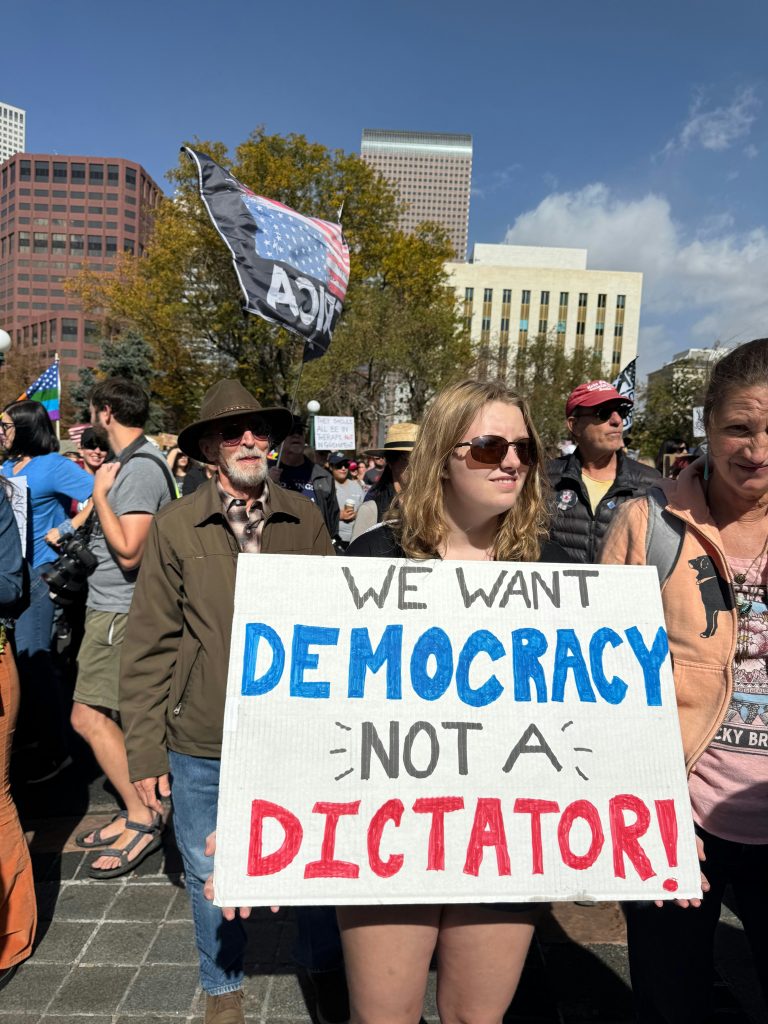
So, yes, theoretically we are voting for people to represent us. But ask yourself how many of the laws we actually live under that you asked for, that you want, and that actually help you instead of hinder you.
Donors, lobbyists, and party insiders filter which candidates reach us and which tax ideas survive. That filter shapes details like net operating loss rules, stock-option deductions, and big corporate credits. Ordinary workers and small-business owners almost never sit in those rooms.
Elections Are Inherently Aristocratic
In truth, the history of elections is one of aristocracy. America’s own Founding Fathers saw it as a way to prevent the rule of the common people. And Ancient Greece, the birthplace of democracy, used elections in very narrow ways. This is because they understood that elections don’t fairly represent the common people.
When it came to fairly representing people, the Ancient Greeks used sortition, instead. In fact, Aristotle is often quoted as saying that “sortition is as natural to democracy, as elections are to aristocracy.”
What is Actually Fair for Americans?
So what have we learned?
- Tesla’s federal effective tax rate over three profitable years was 0.4 percent.
- The typical small business pays closer to 20 percent on its income.
- The top 10 percent hold almost all public stocks – the very assets that enjoy the best tax treatment and the most complex planning.
- Most workers receive the bulk of their income and wealth from W-2s and have little to leverage in the way of “creative accounting” – nor the means to pay for top accountants.
- Our tax code is written by people who are either oligarchs themselves or oligarch-adjacent. They do not represent the common people (and were never really meant to).
If the richest people and largest firms can legally pay near-zero tax on billions in income, while workers and small businesses pay ten to twenty times that rate, can we honestly call this system fair?
The realistic answer is “no.” In fact, since those at the top tend to consume and leverage more public utilities, resources, and infrastructure than most Americans or small businesses, they should actually be paying more than the average American. Anything else isn’t fair or equitable.
“But If We Raise Taxes, The Rich Won’t Be Job Creators Anymore – All The Companies Will Leave!”
Whenever people talk about reforming our tax code to make it fairer, it is inevitably followed by people saying that doing so will crash our economy because all the job creators will leave. This is a half truth, at best. And much less important than we actually think.
The truth is:
- Moderate increases in taxes on the rich or on corporations do not generally trigger a mass exodus or big job losses in real-world data.
- Most new jobs come from small and mid-sized firms and young firms, not from a tiny set of mega-corporations.
- While it’s true that large firms are the source of many jobs, there’s strong evidence that growing market power lets them extract a rising share of value relative to workers.
That last point is particularly important, in my opinion. It’s essentially saying that the more power a company attains, the more they disenfranchise workers (reduced benefits, suppressed wages, layoffs, etc.).
That means that the more our economy relies on the wealthy and their mega-companies for jobs, the more the entire working class across America will be exploited and disenfranchised.
The Ugly Truth About Relying On The Rich
Just to clarify that last section, raising taxes does not lead to major company exoduses or job losses. But even if that was the case, it’s only a stronger argument that we need to empower those at the bottom — everyday Americans and their small businesses.
These are the actual backbone of our economy. These are the actual job creators. This is where real innovation comes from. And the things that empower them include a fairer tax code, universal healthcare, universal education, and other public programs and infrastructure that allows everyday Americans to take more risks, build more inventions, and create more businesses.
We do not actually need these mega-companies or the wealthy and their capital. In our current system, these are leveraged against us and exploit us. The current system is deeply unfair and does not need to be this way.
What a Fairer Tax System Could Look Like
To be clear, I don’t blame Tesla – or even Elon Musk – for doing what they do. It seems to be in their nature, and they are being enabled. But the fact of the matter is:
- wealthy people and big companies have the time, money, and access to shape rules
- lawmakers write rules that do, indeed, stack huge benefits at the top
- workers and small businesses get a much smaller set of breaks
It’s also worth noting that mega-companies and the ultra-wealthy leverage public utilities and infrastructure, which working class Americans pay for, at a much higher rate than the average person or small business. So it would actually make sense for them to pay more taxes than most Americans, instead of less.
So what does a fairer tax system look like?
Level the Tax Playing Field
First, we can narrow some of the biggest giveaways to giant firms:
- Limit net operating loss carryforwards: We could cap how many years large companies carry losses forward and how much profit they offset. That still lets honest businesses smooth rough years, but it stops billion-dollar firms from erasing tax on long runs of strong profit.
- Tighten stock-option deductions: Lawmakers could link corporate deductions for stock pay to the grant value rather than the final market value. The Congressional Budget Office and some tax scholars have floated versions of this idea for years, because the current system lets companies claim large deductions without matching cash outlay.
- Target credits toward smaller players: We can keep incentives for clean energy and useful investment, while we design them so small firms can actually claim them. That might mean simpler rules, direct grants, or refundable credits that do not require massive profits first.
Second, we should simplify and improve life for small businesses:
- raise thresholds for certain filing requirements
- streamline deductions for common expenses
- offer free, high-quality public tax help, not just private preparers
Finally, we could move to a truly progressive flat tax model that accounts for things like stocks and capital gains.
These aren’t cure-alls, but, together, they are at least great first steps toward something that is fairer for all Americans.
Take Tax Law Out of Donor-Driven Back Rooms
If we really want to build a country that actually works for everyday Americans, we need to replace our elected officials with people like ourselves. And that means replacing elections with sortition.
That’s a big ask, obviously. And would require Constitutional reform (a high bar to pass). However, it might be easier to use sortition to reform our tax code. It would still require pressure on our elected officials, but, ultimately, the threshold to enact such reform is much lower. It would be a simple matter of passing bipartisan legislation, instead requiring a Constitutional Convention.
Here’s what that would look like in practice:
- randomly select a large, diverse group of citizens
- give them access to independent experts, plus clear data
- let them review major parts of the tax code
- require Congress to vote their proposals up or down, without amendments
Countries like Ireland and France have already used citizen assemblies on hard issues like abortion, electoral reform, and climate policy. The OECD has documented dozens of these processes and finds that they can reduce capture by narrow interests, because everyday people sit at the table instead of just donors and lobbyists.
This kind of process won’t solve everything. However, it would at least put people who actually live on wages and small-business income inside the room where the tax code takes shape.
Choosing a System That Actually Works for Us
Ultimately, this isn’t really about Tesla or even just about taxes — it’s about who our systems are built to serve. Right now, the tax code, elections, and the broader economy are wired to protect concentrated wealth, while workers and small businesses fund the roads, schools, courts, and infrastructure that make those fortunes possible.
That’s deeply unfair and it doesn’t need to be that way. We can cap and narrow the biggest corporate giveaways, simplify and strengthen supports for small firms and workers, and move tax design out of donor-driven back rooms and into citizen assemblies where ordinary people actually sit at the table.
A fair system is one where those who draw the most from shared resources pay the most back in. It’s a system where the people who make this country run have a say in how that country is run. Where public programs empower and elevate individuals and small businesses. And where the laws serve them, instead of hinder them.
FAQ: Taxes, Representation, Fairness
Is Tesla doing anything illegal by paying so little in taxes?
No. Tesla is using legal tools — loss carryforwards, stock-option deductions, accelerated depreciation, and tax credits — exactly as the law allows. However, the law itself is rigged in favor of capital and big firms.
If it’s legal and we elected the lawmakers, how is this “deeply unfair”?
Because elections happen in a system where big donors, lobbyists, and party insiders heavily shape which candidates and tax ideas even make it to the ballot or Congress — so the rules mostly reflect elite interests, not the average voter’s.
What exactly did Tesla pay in taxes compared to its income?
Over the last three years, Tesla earned about $10.8 billion in U.S. income and paid only $48 million in federal income tax — an effective rate of 0.4%.
How does that compare to what workers and small businesses pay?
Workers typically see 15–35% of income go to income, payroll, and other taxes, and small businesses average around 20% federal income tax once profitable — often 10–20x Tesla’s effective rate.
Don’t households and small businesses also get deductions and credits?
Yes, but on a much smaller and simpler scale. Most households take the standard deduction and maybe some credits; most small businesses can’t use billion-dollar loss carryforwards, massive stock-option deductions, or large corporate credits.
What makes “creative accounting” mostly a rich-person tool?
The wealthy have:
- High-end tax advisors
- Complex income streams (stocks, options, pass-throughs)
- Large sums where small percentage savings are huge
That combination unlocks parts of the code normal W-2 earners simply can’t reach.
Isn’t it possible for anyone to invest in stocks and use the same rules?
In theory yes, in practice no. The top 10% own almost all public stocks and other financial assets, so they’re the ones who actually benefit from capital-gains rates and complex planning at meaningful scale.
If low-income people sometimes pay no federal income tax, aren’t things already progressive?
Some low-income households pay little or no income tax, but they still pay payroll, state, and sales taxes that add up — while the ultra-wealthy can push their effective federal rate toward zero on millions or billions in income.
What reforms would support a fairer tax system?
Ideas include capping how far and how long big firms can carry losses forward, tightening stock-option deductions, redesigning credits so small businesses can actually use them, and simplifying rules while offering strong public tax support. We could move to a truly progressive flat tax model that accounts for things like stocks and capital gains.
What role do elections play in taxes? Why bring up sortition?
Because who designs the tax code is the core problem: Elected officials are structurally donor-dependent. Citizen assemblies chosen by lottery could write fairer rules that reflect everyday people’s realities.
Would raising taxes on the rich and corporations destroy jobs or make them all leave?
Evidence suggests that moderate tax increases on the rich and large firms do not cause mass exodus or systemic job loss — and that most new jobs actually come from small and mid-sized firms, not just mega-corporations.